Sunday, April 24, 2022

Down Goes The #1! Part 3

 There were so many times during the 1960's when the #1 seed got knocked out before the NCAA finals, that I had to separate the decade into two separate categories. Today we'll be taking a look at 1960 through 1965. 

1960 157 - U.S. Ron Pifer Penn State Upsets Sid Terry Oklahoma 8-5 in Round 2 

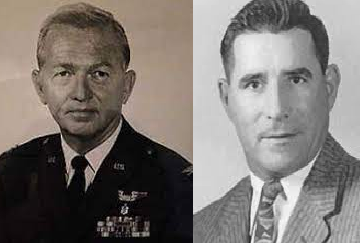
Coming fresh off two Pennsylvania state titles won in 1957 & 1958, Penn State's Ron Pifer made the most of his first NCAA tournament performance when he knocked off returning NCAA runner-up & #1 seed Sid Terry 8-5 in round two.  Pifer would go on to place 4th, while Terry did not place.  Pifer would then earn All American honors twice more for the Nittany Lions, taking runner-up honors in 1961 & 3rd place in 1962.  He went on to coach at Army.  Terry ironically enough became a Flight Instructor for the Air Force. 
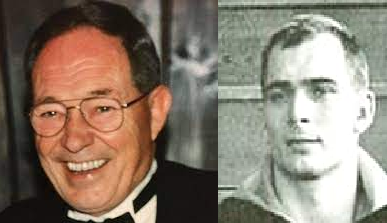
1960 191 - U.S. Jack Stanbro Ithaca Upsets #1 Gordon Trapp Iowa 6-2 in Semi-finals 


An unseeded wrestler from itty bitty Ithaca College who had been a Section IV champion in New York in the days before the Empire State had an official high school championship came out of nowhere to upend Iowa's #1 seed Gordon Trapp 6-2 in the semi-finals.  Jack Stanbro would end up finishing as that year's silver medalist, as Trapp came back to take 4th.  Trapp had placed 3rd in 1959.  Stanbro would later coach before turning his attention to wrestling photography. 
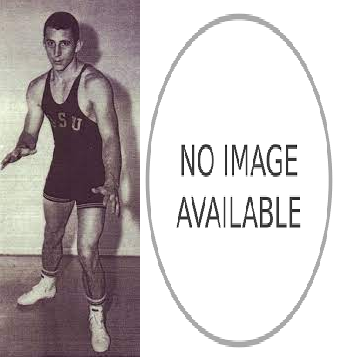
1961 137 - #5 Ron Finley Oregon State upsets #1 Bill Carter 5-4 in Semi-Finals 

It was a wild semi-final match between two juniors that saw Oregon State's Ron Finley pull off a 5-4 upset over #1 Bill Carter of Oklahoma.  Finley would finish as the NCAA runner-up as Carter had to settle for 3rd.  In 1962, Finley would come short of a second NCAA medal as Carter won the title that he had been denied in 61'.  Despite not placing at the NCAA's as a senior, Finley days of glory were ahead of him.  He won PAN-AMERICAN Gold in 1963 as he made the Olympic team in 1964.  He then turned his attention to coaching where he took over rival Oregon, as he lead the Ducks to three conference team titles. 
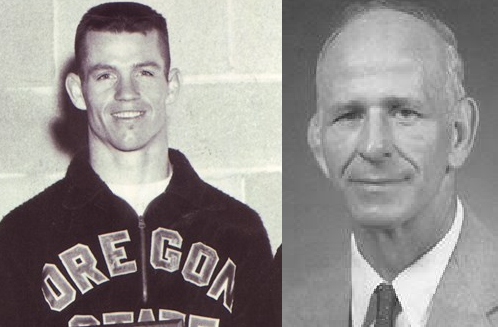
1961 167 - #5 Don Conway Oregon State Upsets #1 Thad Turner Lehigh 8-8, 2-1 in the Semis


Finley wasn't the only Beaver to pull off a huge upset at the 1961 NCAA's. Teammate Don Conway also knocked off the #1 seed in his bracket, ironically enough also in the semi-finals & also as the #5 seed! It was the first time Conway had earned All American honors & he figured he might as well go out on top as he went on to win the NCAA title.  His opponent, Thad Turner of Lehigh who had been the NCAA runner-up in 1960, fell one match short of placing. So difficult to accept the fact that there was a time when even making the NCAA Semi-finals didn't guarantee you All American status. Nevertheless both Conway and Turner turned their attention to coaching post their collegiate careers. Conway coached at UCLA as Turner went on to eventually take the reigns at Lehigh. He led the Mountain Hawks to 8 EIWA conference titles as well as a high 3rd place team finish at the NCAA's in 1979. 
1961 177 - U.S. Art Siml Illinois Upsets #1 Jim Detrixhe Lehigh 6-4 in Round One 


Art Siml's claim to fame while at the University of Illinois is when he knocked off #1 seed Jim Detrixhe of Lehigh 6-4 in round one of the 1961 NCAA's. He would finish one match shy of All American honors. Detrixhe who was a junior at the time, came back to place 4th as a senior in 1962.  He would later lose his life during the Vietnam War in 1966. He was one of a select few who owned a victory over Wayne Baughman during college. 
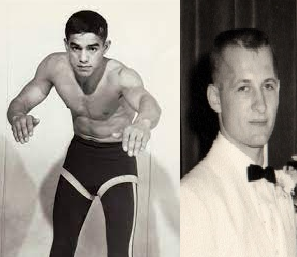
1962 130 - #4 Al DeLeon Mankato State Upsets #1 Tom Huff Iowa 4-1 in Semi-Finals 


In Dan Gable's entire wrestling career he was only beaten a handful of times & he was only pinned once. It's hard to believe that the man who pinned him, Iowa's Tom Huff who ironically also won three Iowa high school state titles for Waterloo West, never won a national title. He was slated to his junior season of 1962, but it was Minnesota State Mankato's Al DeLeon, a three time state champion out of Blue Earth, who would upset Huff 4-1 in the semi finals. DeLeon, who had placed 4th in 1961, would take 2nd as Huff worked his way back to 3rd.  Huff would finish as the NCAA runner-up the following season of 1963. DeLeon would turn to coaching, taking over the historic Britt program in Iowa. 


1962 - U.S. Tom Mulder Michigan State Upsets #1 Ron Finley Oregon State 5-4 in R1

"T-Bird" as he was known to coaches, friends and teammates stopped Ron Finley dead in his tracks for a bid at the NCAA title after finishing 2nd in 1961, when he upset him in the first round 5-4. 
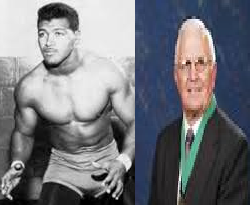
1962 191 - U.S. Joe James Oklahoma State Upsets #1 Nick Kohls Colorado State 3-2 in QF

Joe James only lost three times his entire collegiate career and one of those times was in the finals of the 1962 NCAA championships, after he had upset his way into the finals, including a 3-2 victory over the #1 seed Nick Kohls of Colorado State. James who was only a sophomore at the time, went on to take 3rd place in 1963, before capping off his collegiate career with a NCAA title in 1964. In between his junior and senior seasons, he became the first black from the United States to win a PAN-AMERICAN Gold medal. 
1963 115 - U.S. Gil Sanchez Colorado State Upsets #1 Lowell Stuart Fall 5:49 in Semi Finals

A three time Skyline Conference Champion, Sanchez had yet to make All American Status during his career. Having already established himself with a top 6 finish, he secured himself a spot in the finals when he pinned #1 seed Lowell Stewart of Iowa State in the semi-finals.  Sanchez would place 2nd, as Stewart, another Waterloo West product took 4th. 

1963 123 - #4 Mike Johnson Pittsburgh Upsets #1 Mark McCracken Oklahoma State 7-3 in SF

Big things were expected out of Mike Johnson a four time state champion with an 84-0 high school record that included never being taken down. Although his collegiate career didn't quite turn out the way he was hoping, his shining moment came in 1963 during his junior season when he upset #1 Mark McCracken 7-3 in the semi-finals in route to a 2nd place finish.  McCracken who had finished 2nd in 1962, came back to take 3rd. 
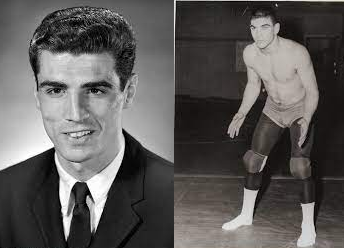
1963 167 - #4 Steve Combs Iowa upsets #1 Terry Isaacson Air Force 2-1 in Semi-Finals 

Ironically enough, even though neither wrestled for an Illinois school, both Combs of Moline High School & Isaacson of Oak Park were Illinois natives. Not much scoring took place between the two, as the Hawkeye edged the Falcon by 1 point.  Isaacson who had placed 2nd in 1962 as a sophomore, would take 4th, finishing up his career with a 6th place finish in 1964. An all state quarterback in high school, Isaacson had come to the Air Force to play football, but decided to wrestle as well.  Combs, a senior at the time, would make the Olympic team in 1968.  He then took over the USWF, growing membership from 9,000 to 90,000. 
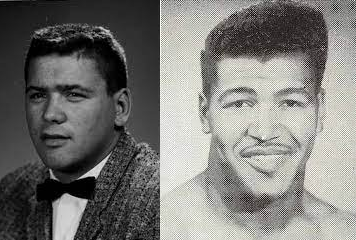
1963 UNL - #4 Larry Kristoff SIU-Carbondale Upsets #1 Joe James Oklahoma State 1-1 SF


Having upset the #1 seed as a sophomore in 1962, Joe James of Oklahoma State was now on the receiving end of an upset when Southern Illinois Carbondale's Larry Kristoff defeated him 0-0, 1-1 on a referee's decision in the semi-finals. Kristoff who had won the NCAA Division II (College Division as they called it in those days) would end up finishing 2nd, as James came back to take 3rd.  Both juniors at the time, James would win the NCAA title as a senior in 1964, as Kristoff won another Division II title, but failed to place at DI's.  Kristoff would go on to international success, earning two bronze and three silver medals at the World Championships, also starting the wrestling program at SIU-Edwardsville. 

1964 130 - U.S. Jim Hanson Colorado Upsets #1 Mike Johnson Pittsburgh R1 

We talked about Mike Johnson earlier as he pulled off a huge upset in the semi-finals of the 1963 NCAA championships. Unfortunately for him, he'd be the victim of a huge upset himself in 1964 when Colorado's Unseeded Jim Hanson took him out 8-4 in round one. Hanson would place 2nd that season.  After not placing in 1965 as a junior, Hanson came back to take 4th in 1966 as a senior.  He was later piolet during Vietnam. 
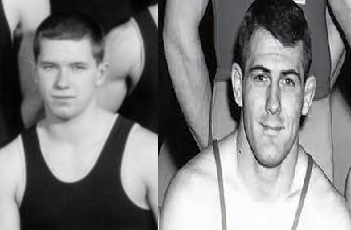
1964 137 - U.S. Gary Wilcox Michigan Upsets #1 Bob Buzzard Iowa State 2-1 in Semi-finals 


Despite earning All American honors in 1963 with a 6th place finish, Gary Wilcox of Michigan was still unseeded when he pulled off a 2-1 upset over Iowa State's #1 Bob Buzzard in the 1964 NCAA Semi-finals.  Buzzard a product of East Waterloo came back to take 4th as Wilcox finished 2nd. Buzzard would earn All American honors again in 1965 with a 3rd place finish, earning a spot on the Olympic Team in 1972. 
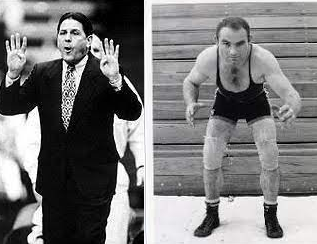
1964 157 - U.S. Bill Lam Oklahoma Upsets #1 Jack Flasche Northern Colorado 4-3 in QF


Jack Flasche, a three time conference champion, had won a NCAA title in 1962 as a sophomore.  With a standout season, he was predicted to win another title in 1964 as a senior, but he would lose a heartbreaker to unseeded Bill Lam of Oklahoma 4-3 in the quarterfinals.  Lam would then lose in the semi-finals, but work his way back to a 3rd place finish.  In 1965, Lam made the NCAA finals, taking runner-up honors. Unfortunately he suffered broken ribs in 1966 & was unable to participate in the national tournament.  Lam would go on to a successful coaching career at the University of North Carolina & today runs Wrestling With Life. We sadly lost Flasche in a auto accident in 2010. 
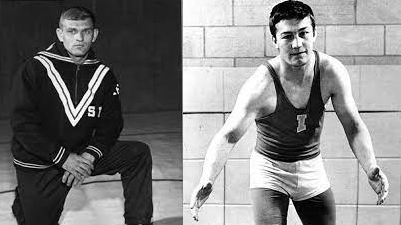
1964 167 - U.S. Don Millard SIU-Carbondale Upsets Tom Peckham Iowa State F-7:05 in QF

Don Millard marks yet another small school wrestler that was more than happy to show the big school wrestlers that he could hang. A two time Illinois state champion out  of Pekin High School, Millard made the most out of his final season as a Saluki. He won the NCAA DII title (College Division back in those days) &  then pulled off a huge upset when he stuck #1 seed Tom Peckham of Iowa State.  Millard would win the NCAA DI title as Peckham took 5th.  Peckham a three time state champion out of legendary Crestwood High School, would not see defeat at the NCAA tournament again, as he won back to back titles in 1965 and 1966.  He made the 1968 Olympic team, finishing one match shy of a medal. 
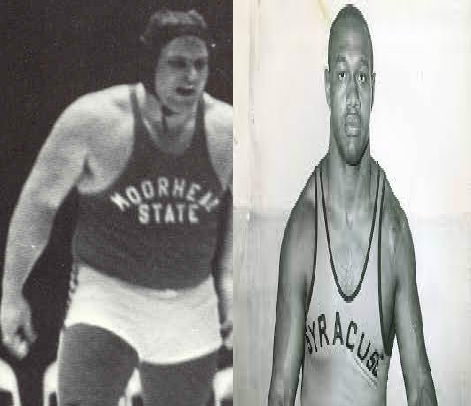
1964  UNL - U.S. Bob Billberg MSU-Moorhead Upsets #1 Jim Nance Syracuse 2-1 in QF

There's one thing that Syracuse football & Wrestling superstar Jim Nance didn't do much during his illustrious career and that was lose. The two time NCAA champion who won titles as a sophomore in 1963 & as a senior in 1965, stepped on the mat and he almost always got his hand raised at the end of the match. One of the only times he didn't was against Bob Billberg, from the NAIA program Minnesota State Moorhead. Billberg who had won the NAIA title, upset Nance 2-1, in route to taking NCAA DI runner-up honors. In 1965 as a junior, Billberg finished 3rd in the NAIA & that was not a good enough finish to be invited to the NCAA DI's.  He'd come back strong as a senior in 1966 though, winning a second NAIA title & again finishing second in NCAA DI.  
1965 115 - #4 Glenn McMinn Arizona State Upsets #1 Rich Warnke Lehigh 7-7, 3-1 S.V. in SF


Now here is an interesting story. Rich Warnke didn't win the EIWA's. Matter of fact, he didn't even place at them. He went 0-1 at the tournament. Even more interesting, up to the EIWA tournament, he had be a reserve for most of the season. Yet, he still went to the NCAA's as the #1 seed. How in the world did that work? Well, back in these days the NCAA had a 115 lbs weight class, where as the EIWA's lowest weight class was 123. Both Warnke & teammate Mike Caruso wanted to drop down to 115 for the NCAA's.  Caruso from 123 & Warnke from 130.  Warnke won the wrestle-off against Caruso. This alone gave the seeding committee reason to seed Warnke #1.  He darn near lived up to expectation as he had one heck of a match with Arizona State sophomore Glenn McMinn in the semi-finals. McMinn would finish as the NCAA runner-up as Warnke took 3rd.  Now we've seen some miraculous things happen in collegiate wrestling before, but I doubt we'll ever see this again. Can you imagine entering the NCAA tournament with a 4-1 record & you're given the #1 seed just because you were able to beat your teammate? That's insane.  Granted Mike Caruso was a three time NCAA champion in his own right, but that's still asinine.   As to McMinn he would not place in 1966 as a junior, but he would come back for a strong 3rd place finish in 1967 as a senior. He ended his career at Arizona State with a record of 104-11. 
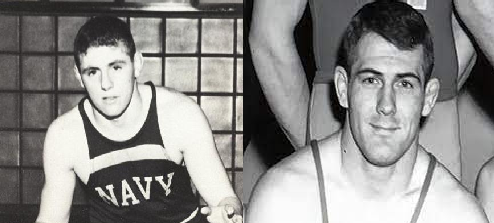
1965 137 - #5 Wayne Hicks Navy Upsets #1 Bob Buzzard Iowa State 8-4 in SF 

Buzzard would again be on the receiving end of an upset when he dropped an 8-4 decision to Wayne Hicks of Navy in the NCAA semi-finals. He came back strong to finish 3rd as Hicks took 2nd.  Hicks a junior at the time, did not place at the 1966 NCAA's, although he did win his second EIWA title. 
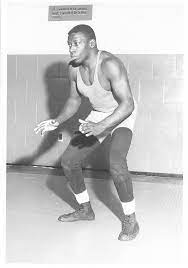

1965 147 - Bobby Douglas of Oklahoma State has to Medical Forfeit out of the Tournament 


As far as I'm concerned, Bobby Douglas makes yet another case for the toughness of NAIA wrestling. He began his career at NAIA West Liberty, where he won an NAIA title & finished 2nd at the NCAA DI's as a sophomore in 1963. He then transferred to Oklahoma State, where in 1965 as a senior he was picked to win the NCAA title, but he suffered a concussion which ended his collegiate career. If you read a lot of JT#1 you know that I often go to bat for the NAIA & Douglas is often a go to for me in my testimony. Not many people can say they own an 11-1 freestyle tech fall over Dan Gable. Bobby Douglas, an NAIA wrestler can.

===== 

Be sure to check out DOWN GOES THE #1! Part 4 which will cover times from 1966 through 1969 when #1 seeds went down before the NCAA finals! 


Tuesday, April 12, 2022

4 Times When Basketball Was a Friend To Wrestling


Exactly how or when our animosity towards basketball began is rather a mystery. Common sense says that it primarily comes down to competing with the sport for athletes, space, time & media coverage. The two take place during the same season, and both for many isn't an option. It would seem that this hostile rivalry between the two sports is perpetual, but history proves otherwise.  

As an amateur historian of our sport, I have been pleasantly surprised by the rather large number of some of our top wrestlers of the 1920's, 30's, 40's, 50's & early 60's, who also had success in basketball. It's not until the mid to late 1960's, when you really start to see the two sports go from friendly contemporaries to bitter adversaries. 

I think you would be shocked to learn of some of the names that also had some background in basketball. Harold Nichols ring a bell? Believe it or not, he got his start in collegiate coaching not on the mat, but on the court. He worked as an assistant basketball coach at Arkansas State, before starting the Red Wolves wrestling program that he ran from 48'-49' through 52'-53'.  We're all very familiar with his career once he headed north to Ames, Iowa to take over the Cyclone wrestling program. 

Point is, many of us in the wrestling community see basketball as the enemy.  Furthermore there are stories of when and how basketball truly has been an enemy.  There have been programs that have gotten the shaft in favor of basketball. There have even been programs that have been cut because of basketball.  Where I grew up, I can name a high school that refused $$ to start a wrestling program, because they thought it might put their basketball rich tradition at stake. So, I'm well aware of the realities that surround the stereotypes. 

Yet, believe it or not, I am not one of these guys that hates basketball. Matter of fact, I've pretty much never hated basketball. When I was little I wore the T-shirt with the The only thing I adore on a basketball floor is wrestling mats from door to door & I played along within the rivalry but by the time I got to junior high, I simply saw wrestling as the sport that was for me and basketball as the sport that wasn't. I attended basketball games in high school to support the kids that supported me by attending my wrestling duals. To this day I attend two or three basketball games a season. Comparatively speaking to the 25+ wrestling duals/tournaments I attend. 

I'm not here to sell you on basketball or suddenly make you into a pumpkin pushing lover.  However, I want you to be aware that basketball isn't always our enemy. Matter of fact, there have been times when Basketball has been our friend. 

Here are 4 examples of when Basketball was a friend to wrestling. 


4 - High School Basketball Star Starts Collegiate Wrestling Program at Marin 

During his youth, Jim McGowan was vastly interested in martial arts. He took an assortment of classes from judo to jiujitsu.  Competing for Tamalpais High School (California) he was a standout on both the gridiron and the court, helping lead his school to league titles in both sports. Joining the Marines after high school, McGowan wouldn't discover wrestling until he enrolled at classes post his time in the Marines at San Francisco State University. It was there he saw wrestling and figured that it was a martial art that he had to add to his repertoire. Although sought after for the basketball team, McGowan found himself soon in love with the sport. By the time his collegiate career was over, he had earned conference honors. Soon after he got a job at the College of Marin. The only thing he didn't like about the school was that it didn't have a wrestling program.  So in the winter of 1963, he started one.  It would last until it was discontinued after the 1996-97' season. 

3 - Another High School Basketball Star Becomes a Fixture in Wrestling 

 During his high school days, Russ Thurman was a star on the basketball court and on the track. He came to Linfield with the intention of competing for the Wildcats in both. Yet at the time, Linfield was starting a wrestling program. For one reason or another Thurman's track coach Hal Smith thought that time on the mat would be better for him than time on the court.  Only one small problem stood in the way. Linfield couldn't find anyone to coach the team.  Thurman who knew nothing about wrestling went to the library and got some books. He then went around to the local high schools that had programs & began to pick the brains of any and all of the coaches that would teach him the sport. Linfield would not allow Thurman to coach as an athlete, so Thurman found the first professor willing to learn and taught him enough so that he could be named coach.  Post college, Thurman had grown to love wrestling so much that he took over the Crook County High school team.  He led his team to 500 dual victories against only 76 losses.  This included 17 district team titles, 2 State team titles & finishing in the top 10 at the state tournament on 18 occasions. Not bad for a guy that had originally gone to college to shoot hoops. 

2 - A Good Friend's Passion Leads to One Developing A Passion Himself 

Frank Furtado grew up with a deep passion for both football and basketball, where he was a standout on both teams during his high school days growing up in Ripon, California. Although he never lost his love for basketball & it was probably always his deepest passion, he began a passion for wrestling in one of the strangest ways. Post high school, he began going to a Dentist that he had a deep respect and admiration for. This Dentist had been a wrestler & he had started a wrestling club that he encouraged Furtado to check out.  At the time Furtado was coaching basketball at George Fox, but as he learned more and more about wrestling, he made it a mission to start a program at George Fox too. 

It wasn't too long after that Furtado found himself at Seattle-Pacific where he took it upon himself to take over the wrestling program.  The time for Falcon wrestling was short and sweet, only last 10 seasons, but Furtado made the most of his time. He had at least one NCAA qualifier to the DII championships every season, taking his team to a 9th place finish in 1971 & a 7th place finish in 1972.  When Seattle-Pacific decided to discontinue wrestling, Furtado turned his attention back to basketball.  He got a job working with the Seattle Supersonics for the next 35 years. 


1 - Legendary Basketball Coach Brings Varsity Collegiate Wrestling to Texas 

The history of collegiate wrestling in our southern states is a long, convoluted and complicated one. There have been many over the years who have done their best to grow wrestling in the south, but one who is often overlooked as well as underappreciated is the late George McCarty.  Already a legend for various reasons, one of which was breaking the color barrier by recruiting Texas El Paso's first African American athlete, basketball star Charlie Brown, McCarty was extremely instrumental in starting up the wrestling program at UTEP. 

Matter of fact, it was his idea. He was aware of the work that Swede Umbach had been doing getting wrestling programs in the SEC & despite the fact that he was the head basketball coach, he thought it would be great for the Miners to field a wrestling program.  He worked diligently hiring Bruno Rolack as the head coach, as he worked with Rolack in developing a pipeline with Joliet Community College in Illinois for recruiting purposes.  He worked hard to try and get other schools in Texas to consider adding wrestling, but most wouldn't. Southern Methodist made a commitment as did Texas Christian that if the other schools in the Lonestar state would field teams, they would too, but nothing came to fruition. (Which is a mostly true statement, although there were some club programs & LeTourneau had a varsity program, as well as a couple of NJCAA's).  

Lasting from the 68'-69' through the 70'-71' season, the costs of keeping the wrestling team became too much as all of the competitions were away. McCarty could not convince any of the schools with wrestling to make the long, treacherous trip down to El Paso, Texas, nor could they afford the long trips themselves.  As a result, the program came to an end. 

Nevertheless it should be remembered as well as celebrated that a man whose business was more or less coaching basketball, took it upon himself to not only start a wrestling program at his college, but to also try and help the sport of wrestling grow in an area where it had practically no presence. So even if 99% of you still hates the sport of basketball after you've read this article, let that be the 1% of you that doesn't. 


Monday, April 11, 2022

Down Goes The #1 - Part II

 We continue where we left off in part I of Down Goes The #1 where we take a look at NCAA Division I tournaments from the 1950's where #1 seeds got knocked off before the finals. 

1950 128 - #4 Walter Romanowski Cornell (IA) upsets #1 Charles Hetrick Oklahoma State in SF 

A junior from the small college of Cornell in the small town of Mount Vernon, Iowa, Walter Romanowski never won a state title during his years of high school wrestling in the state of Illinois.  Making the NCAA semi-finals in his junior season, his opponent would be 1949 NCAA champion Charles Hetrick of Oklahoma State. Romanowski upset the Cowboy 6-4. He went on to take runner-up honors while Hetrick would finish one match shy of All American. It wouldn't be the only time Romanowski knocked off the #1 seed. 

1951 130 - #4 Walter Romanowski Cornell (IA) upsets #1 George Lewis Waynesburg in SF


Two years in a row the seeding committee bet against Romanowski making the finals & two years in a row he proved the wrong. Back in the days of every school being in the same tournament before being divided up into DI, DII & DIII, it was an unusual sight to see two small school wrestlers seeded so high, but it was the case in 1951 between Romanowski and Lewis. This time in the NCAA semi-finals Romanowski would win on a referee's decision. He'd go on to win the NCAA title, finishing off his career a two time finalist. Having gotten injured in the match with Romanowski, Lewis had to medical forfeit out of the tournament.  A national champion himself in 1948, with a final year of eligibility remaining, he finished 4th in 1952. 

1951 157 - U.S. Phil Smith Oklahoma upsets #1 Don Ryan Wisconsin in R2 

Smith a graduate of Tulsa Central High School came into the NCAA's and knocked off Ryan 10-8 in round 2, as he eventually worked his way to an NCAA title. Ryan finished one match shy of All American status.  The next season after winning his third BIG 10 title, Ryan would again be upset as the #1 seed, this time 3-2 by Northern Iowa's Bill Weick. This time though, Ryan would come back to finish 3rd. 

1952 191 - #4 George Myers Iowa upsets #1 Brad Glass Princeton in SF 

Before the days of overtime/sudden victory when a match ended in a tie in a tournament setting, the winner was determined by a referee's decision.  That was the case when Iowa's George Myers moved into the finals against Brad Glass of Princeton when he wrestled him to a 4-4 tie.  Myers would end the tournament as the runner-up.  Glass, who had won the NCAA title in 1951, had played in the Lambert Cup earlier that year as a member of Tiger football team. He finished 3rd. 

1953 157 - #4 Dan Sniff Colorado State Upsets #1 Joe Solomon Pittsburgh in SF 

Dan Sniff of Colorado State was a junior in 1953 when he upended #1 seed Joe Solomon of Pittsburgh 6-1 in the NCAA semi-finals. Unfortunately Sniff would miss out on his senior season due to an injury.  Ironically enough, Solomon entered the 1954 NCAA's unseeded & won a national title as a junior.  He again received the #1 seed his senior year & wound up finishing 4th. Go figure. 

1954 137 - #4 Eddie Eichelberger Lehigh upsets #1 Andrew Kaul Michigan in Semi-Finals

There's more than one cool fact to be learnt in this NCAA semi-final match from 68 years ago. Lehigh's Eddie Eichelberger upset Andy Kaul 8-2 in the semi-finals. Eichelberger was from the long illustrious line of phenomenal talent out of Granby High School, having used the same techniques that would lead Carl Perry of Illinois to a national title 46 years later. Eichelberger would finish 2nd that year, coming back to win back to back titles in 1955 & 1956.  Kaul, who was a junior at the time, finished 4th. The next season he made the NCAA finals, taking home runner-up honors. Post graduation Kaul moved back home to his native Pennsylvania where he often attended Penn State wrestling matches. He loved it when they'd dual Michigan at home, where he was known to come decked out in Wolverine gear & cheer loud for the visiting team. 

1955 123 - U.S. Sam Carlo SUNY-Cortland upsets #1 Dick Govig Iowa in Quarter-Finals 


 A two time state champion out of Britt High School, Iowa's Dick Govig won an NCAA title his sophomore year of 1954. He was poised to win a second title in 1955 as a junior, but was stopped dead in his tracks on a referee's decision when Sam Carlo of small SUNY-Cortland upended him. Neither wrestler would earn All American honors, as Carlo lost in the match to place.  Govig would unfortunately miss out on his senior year of competition due to injuries. 


1955 137 - #4 Larry Fornicola Penn State upsets #1 Don Hart Oklahoma in Semi-Finals 

Both Larry Fornicola of Penn State & Don Hart of Oklahoma were seniors entering their final NCAA championships having yet to have earned All American honors. They met in the semi-finals where Fornicola pulled off a huge upset pinning his Sooner foe in 8:30. He would go on to win the NCAA title as Hart would finish one match shy of a top four All American finish.  Despite not earning All American honors during his career, Hart was a two time BIG 12 champion who went on to a successful career as as both a hydrologist and a geologist. He also competed in and won many duathlons and triathlons during his life.  Fornicola turned his attention towards coaching, where he became a three time NJCAA coach of the year heading the Keystone College program. 


1956 - #1 Seed Mike Rodriguez Michigan has to default/Medical Forfeit out of Tournament 


I debated on whether to count this one or not. Mike Rodriguez of Michigan, a three time BIG 10 champion, had made the NCAA finals the year before in 1955.  Entering the NCAA's in 1956 as the #1 seed, he ended up having to default his semi-final match & then medical forfeit in the All American match. Obviously not upset either time, he was still a #1 seed that did not win a national title.  He came back strong as a senior in 1957, ending his career as an NCAA champion.  Years later in 1967 he took over the Detroit Central Catholic program where he would remain for the next 40 years.  He coached his team to 10 high school state championships. 

1956 UNL - U.S. Gordon Roesler Oklahoma upsets #1 Bill Oberly Penn State 8-6 in Round Two 

The word "natural" doesn't come up very often in our sport. We like to romanticize the idea of years and years of hard work and practice to master the strategies and techniques of our sport. Yet every now and again, someone will come along that seems to have it mastered before even trying it. Gordon Roesler's first exposure to wrestling was in 1954 as a senior in high school. He began learning the sport that winter and a few months later he was standing a top an award stand as the state champion.  Entering his first NCAA tournament as a sophomore, he found himself up against the #1 seed Bill Oberly of Penn State who had won the NCAA title in 1955 after finishing 3rd in 1954.  Roesler pulled off the upset 8-6. He'd go on to win the NCAA title, while Oberly would take home 3rd place.  His remaining two years of eligibilty Roesler finished 3rd in 1957 as a junior and 2nd in 1958 as a senior. 

1957 130 - #1 Seed Bobby Lyons of Oklahoma has to Default/Medical Forfeit Out of Tournament 


After finishing as the NCAA runner-up in both 1955 & 1956, it looked as if Oklahoma's Bobby Lyons might finally win his NCAA title. Unfortunately injury would get the best of him as he had to medical forfeit out of the tournament. 

1957 147 - U.S. Ron Gray Iowa State Upsets #1 Dave Adams of Penn State in Semi-Finals 


A three time state champion for Eagle Grove high school, Gray entered his first NCAA championships as a sophomore in 1957 unseeded.  There he would meet the 1956 NCAA Runner-up & #1 seed Dave Adams of Penn State in the semi-finals, whom he would upset 3-0.  Gray would take runner-up honors himself, after losing a 2-2, 2-0 match to Iowa's Simon Roberts, who became our sport's first black NCAA champion. Adams would finish one match shy of earning his second All American honor.  Gray would go on to win two NCAA titles for the Cyclones in his remaining years of eligibility 1958 & 1959. Both would go on to coach at the Division I level, with Adams coaching at Pittsburgh & Gray taking the reigns at Kent State, where he lead the Golden Flashes to 9 MAC titles. 

1957 167 - U.S. Ralph "Duke" Schneider Waynesburg upsets #1 Roy Minter MSU-Mankato in SF


Sometimes when doing comprehensive historical studies on wrestling you come across mysteries that the late Robert Stack would call "unsolved." Waynesburg's Ralph "Duke" Schneider was 3rd in the nation in 1952 & then he showed up again in 1957 to upset #1 seed Roy Minter of Minnesota State Mankato 5-3 in the semi-finals. Where he was or what he was doing between 1952 & 1957, I have yet to discover. Hypothesis has me guessing it might have had something to do with the Korean War, but I have yet to confirm or nullify.  Minter on the other hand was a junior at the time, who had finished as the NCAA runner-up in 1956 as a sophomore. This season he would take 4th & he would take 4th again in 1958 as a senior. Along with taking 4th in 1958, he also won a title at the first ever NAIA championships. 

1957 UNL - #4 Henry Jordan Virginia upsets #1 Gordon Roesler Oklahoma 5-4 in Semi-finals 


More known for his accolades on the gridiron, Virginia's Henry Jordan was also outstanding on the mat. Entering the NCAA's the #4 seed he would upset 1956 NCAA champion & #1 seed Gordon Roesler (who we talked of earlier) 5-4 in the semi-finals.  He would finish 2nd in the nation as Roesler came back to take 3rd.  Post his NCAA runner-up performance, Jordan turned his attention back towards football where he had a successful career in the NFL competing for both the Cleveland Browns & the Green Bay Packers. 

1958 147 - U.S. Earl Dearing Oregon upsets #1 Simon Roberts Iowa 2-2, 4-0 in Round 2


In 1957 Simon Roberts made history by becoming the first black wrestler to win an NCAA title. He was poised to win a second NCAA title in 1958, but he was stopped in round two by Earl Dearing of Oregon who upended the Hawkeye 2-2, 4-0.  Roberts would not get an opportunity to wrestle-back as Dearing finished one match shy of All American honors. 

1958 177 - #4 Gary Kurdelmeier Iowa Upsets #1 Frank Powell Iowa State 6-4 in Semi-Finals

The Hawkeye-Cyclone rivalry continued when Iowa's Gary Kurdelmeier upset #1 Frank Powell of Iowa State 6-4 in the NCAA Semi-finals. Kurdelmeier would go on to win the NCAA title as Powell came back to finish a strong third. For note, Kurdelmeier defeated Tim Woodin of Michigan State, who went on to fame in professional wrestling as Mr. Wrestling in the finals. He would then go on to become Coach at the University of Iowa, often credited with the growth of collegiate wrestling's popularity & being the man who brought Dan Gable to Iowa. Later he would try and help collegiate wrestling to grow in the state of Georgia, when he started a program at Georgia State. 

1958 191 - U.S. Adnan Kaisy Oklahoma State upsets #1 Dave Dunlop Cornell (NY) 8-4 in R2 


Few have the interesting background of Adnan Kaisy. Born and raised in Iraq, he grew up a schoolmate of Saddam Hussein & he also played baseball with him. Having started wrestling at a young age, he fell in love with the sport. However, it was his talents on the gridiron that first brought him to college, as he began his collegiate days a member of the University of Houston's football team. Missing wrestling, he transferred to Oklahoma State, where despite being away from the sport for quite sometime, he found himself upsetting the #1 seeded Dave Dunlop of Cornell in R2 8-4.  It was a rather big upset, as Dunlop was coming off a high, having just won an individual EIWA title, that in turn led the Big Red to an EIWA team title. Adnan would take 4th at the NCAA championships, capturing another 4th place finish in 1959 as a senior.  He then went on to fame in professional wrestling competing as both Billy Whitewolf and as General Adnan. 


1959 115 - #4 Andy Fitch Yale Upsets #1 Bob Taylor Oklahoma State 5-2 in Semi-Finals 

The Bulldog's Andy Fitch entered his final NCAA championships having never won an EIWA conference title. He made it to the semi-finals where he had to face #1 seed Bob Taylor of Oklahoma State who had finished as the NCAA runner-up in 1958.  Fitch would pull off the upset 5-2, as he went on to win the NCAA title, being in an elite group of wrestlers to win nationals that never won conference. Taylor finished 3rd. Post college Fitch would earn a gold medal at the 1963 PAN-AMERICAN championships as he spent years trying to get a professional league of folkstyle wrestling going. 

1959 123 - U.S. Doug Bingham Utah Upsets #1 DuWayne Miller Oklahoma 9-8 in the QF 


Doug Bingham of Utah was married with three children when he pulled off a huge 9-8 upset over #1 seed DuWayne Miller of Oklahoma in the NCAA quarterfinals. He would end up finishing one match shy of placing.  The next season of 59'-60', Bingham would tragically lose his life in a dual against Wyoming when his heart stopped beating during the match. Miller would later return to win the NCAA title in 1961. 

1959 137 - #5 Larry Hayes Iowa State Upsets #1 Paul Aubrey Oklahoma 4-2 in Semi-Finals

Larry Hayes has the distinction of being the Cyclones first three time NCAA champion & he did so by starting off with his first title in 1959.  In order to win that title, he had to overcome 1958 NCAA champion Paul Aubrey 4-2 in the semi-finals.  Aubrey who finished 4th in 1957, came back from his semi-final loss to take 3rd. 

1959 167 - #4 Ed Hamer Upsets #1 Duane Murty of Oklahoma State in Semi-Finals


While finding wrestlers whose true passion is football is a dime a dozen, we don't come across too many whose passion is the sport of golf.  This was the case for Lehigh's Ed Hamer, who upset returning NCAA champion & #1 seed Duane Murty of Oklahoma State in route to the national title in 1959. Hamer would go on to coach varsity Golf as well as Cross Country at Lehigh post graduation.  Murty, finished 3rd that season. 

1959 177 - U.S. Al Blanshan MSU-Mankato Upsets #1 Bill Wright Minnesota in Semi-Finals


For those among us who threw a fit about Stevan Micic of Michigan & Mike Kemerer of Iowa still wrestling well into their upper twenties this season, they would have had an absolute conniption following the career of Al Blanshan of Minnesota State Mankato. As a sophomore in 1958, he won an NAIA title.  Then as a junior in 1959, he upset Bill Wright of Minnesota 4-3 in the NCAA semi-finals in route to a runner-up finish. (Wright came back to finish 3rd).  Blanshan then left college and entered the working force, only to return to college in 1969, 10 years post his junior year to finish his final year of eligibility.  Amazingly enough, he made the NCAA DII finals! This allowed him to compete in the NCAA DI tournament, where he went 0-1. 

==== 

Hope you enjoyed Part II of "Down Goes the #1!"   Make sure to check out Part III!  


Saturday, April 9, 2022

Down Goes the #1! - Part I

 Few things excite collegiate wrestling fans more than upsets. They're stimulating, they're thrilling & often they are the most discussed topic when they take place. Obviously some have a higher precedence than others, but I believe they all have a story worth telling.  In "Down Goes the #1" we're going to take a look at the times when the #1 seed was defeated starting with the NCAA Division I tournament. 


1940 121 - U.S. Casey Fredericks Purdue upsets #1 Frank Burgess of Franklin & Marshall in QF 

An official score is not given of NCAA wrestling's first official upset of a #1 seed. Before this moment their were certainly victories at the NCAA's that would be by today's stands considered "upsets" but 1940 marked the first tournament were official seeds were given.  Neither Fredericks or Burgess would be All Americans this tournament, but that has to do with the fact that in 1940 only the top three places were awarded. The way the brackets were conducted was much different than what it is today as well.  Along with being collegiate wrestling's first wrestler to upset a #1 seed at the NCAA's, Fredericks would go on to coach the Ohio State Buckeyes from 1948 to 1976. He lived a long, illustrious life, passing away at the age of 90. 

1940 UNL - U.S. George Downes Ohio State upsets #1 George Chiga Oklahoma State in R1


The plan was for Canadian born George Chiga, who had made the Canadian Olympic team in 1936 to go in and capture an NCAA title for the Cowboys, but senior George Downes of Ohio State had other plans for his final NCAA tournament. Again an official score is not given, but Downes upset the Cowboy as he went on to win the NCAA title. 

1941 128 - U.S. Loy Julius Iowa upsets #1 Ray Stone Iowa State in QF

As the Iowa Vs Iowa State rivalry continues to this day, it's hard to believe that it was going on some 81 years ago, but it was.  U.S. Loy Julius gave the Hawkeyes a huge win in the NCAA quarterfinals when he upended Cyclone Ray Stone 7-5.  Julius was unable to garner a win in the semi-finals but he did come back to win his All American match, eventually placing 4th.  Despite the rough outcome for Stone, he went on to find his calling in coaching, coaching various high school programs in Iowa & Wisconsin.  Julius went on to serve in the Army Air Corps during World War II & later taught Dentistry at Creighton University. 

1941 UNL - #4 Larry Pickett Yale upsets #1 Loyd Arms Oklahoma State in SF

It's hard to believe when someone is as good at wrestling as what they are, that wrestling isn't their first love, but that is the case with Maryland born Larry Pickett of Yale.  Loyd Arms of Oklahoma State entered his first NCAA tournament as a sophomore, planning to win his first national title when Pickett put him on his back & secured the fall at 4:55.  Pickett went on to take home runner-up honors as Arms fought back hard to finish 3rd.  Post college Pickett coached a variety of sports, including wrestling & his favorite sport baseball at the high school level. He lead his baseball program to 209 wins & 9 conference titles.  Taking time off to serve our nation in WWII, Arms would come back to win an NCAA title in 1946 as a junior, finishing off his career with a 4th place finish in 1947. Ironically enough it may be safe to say that wrestling may not be the sport Arms is most known for either. He went on to play in the NFL for the Chicago Cardinals. 


Now here are some facts about the rest of the 40's that may surprise you.  I'm sure that you are well aware that there was no NCAA tournament in 1943, 1944 or 1945 due to World War II.  However, did you know this little fact about 1942? 

In 1942 All of the #1 seeds won national titles

1946 was an interesting season itself as their were no seeds. 


1947 165 - #4 Bill Nelson Northern Iowa upsets #1 David Shapiro Illinois in SF 


One thing collegiate wrestling fans are obsessed with is sensational freshmen. Perhaps this fixation with seeing wrestlers do well in their first season of varsity wrestling began with Northern Iowa's Bill Nelson.  While defending NCAA champion David Shapiro of Illinois (who is also noted in history as being one of our first transfer wrestlers having originally started off wrestling for Indiana) entered the NCAA tournament with plans of ending his career a two time champion, it was rookie Nelson who stopped him dead in his tracks with a 6-5 decision in the semi-finals. Shapiro dusted himself off & came back to a 4th place finish as Nelson won the national title.  Many wrestling historians believe that Nelson could have very well been the first wrestler to win four NCAA titles if it hadn't been for an injury his sophomore season.  He went on to win two more titles as a junior & senior, going on to a glorious career of coaching. 


1948 was perhaps the strangest year collegiate wrestling has ever seen, especially in terms of the national tournament.  

1949 all of the #1 seeds made the finals. 

=== 

In Part 2 of Down Goes the #1! we will be taking a look at the 1950's. 


Monday, April 4, 2022

2022: Final Thoughts HWT

 Many have said that they felt that HWT was bar none the toughest weight class of the year.  It's hard to argue against that thought. Everyone has different measuring sticks & to me there be no greater test than to take a look at the talent that did not place.  Two time All American Trent Hillger of Wisconsin, All American & five time MAC champion Matt Stencel of Central Michigan, Big 12 champion Wyatt Hendrickson of Air Force, All American Tate Orndorff of Ohio State, plus more.  This was a tough bracket. 


We were really spoiled getting to see someone like Gable Steveson compete weren't we? The testimony to how truly gifted the man was on the mat is how easy he made it look. These are the best HWTs in the entire nation, many with international success & he made it look like a cakewalk. If we made robots that could wrestle, I'm not sure if you could engineer one that performed at this Golden Gopher's level. 

In the height of Gable's popularity I have to say that it astounds me all of the anti-professional wrestling posts & memes that I've seen pop up lately in various places. Steveson is going to the WWE & instead of crying the antiquated, "fake!" line that has grown so tiresome, maybe more of us could stand to embrace the positive that it will have on our sport. Of course all of us know who Gable Steveson is, but to the world outside of collegiate wrestling, the name might not be as popular as we'd like it to be. I guarantee you him being on WWE television & furthermore WWE Pay Per View got his name out there to the general public. People heard, "NCAA champion Gable Steveson of Minnesota" while they were viewing.  WWE helped to generate his name to millions of people across the country and the world.  WWE is going to make Steveson into a superstar. He's going to be the next Hulk Hogan, Stone Cold Steve Austin. You watch, give it 5 years and he'll be huge. Television shows, movies, the whole works. 

Young men and young women will idolize him, wanting to be just like him. His background in collegiate & international wrestling will be brought up left and right. These kids will join their local wrestling teams because of it. I'm not asking you to suddenly tune into RAW every Monday night, but in the least realize the huge positive impact that will have on our sport.  


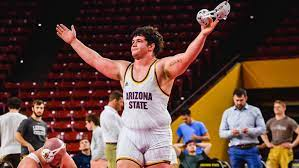
I think in the years to come it is very possible that we look back on the 2022 NCAA HWT finals & realize that we saw a match between two Olympic Gold Medalists. Perhaps I'm off my hinges but I don't think it's too much of a stretch to foresee Arizona State's Cohlton Schultz one day earning an Olympic Gold medal in Greco-Roman wrestling. His upper-body skills are already superb & he's going to improve.  4th & now Runner-up, he has the chance to be a five time All American. No guarantees for a national title though.  Stevesonless, HWT will still be absolute chaos next season. 


I'm gonna miss this guy.  The thing I love about watching wrestling the most, is guys with heart. Guys that go out onto the mat and win or lose, give you everything they have. That's the way Jordan Wood of Lehigh competed, and it was a treat to watch. He wasn't really in the discussions when fans sat around wondering who might meet Steveson in the finals, but when it was all said and done, he showed everyone that his name belonged. I've always been on the spirit that whether you strike out or you hit a homerun, swing that bat as if you're going for the rafters. That's exactly what Wood did. He may have came out on the losing end of the match with Schultz, but when that pitch was thrown he swung that bat like he was aiming for the moon. You gotta respect that.  Then he came back strong to a third place finish.  The EIWA's only 5 time champion, his place is forever cemented in the history books. 


That parity amongst these three extraordinary talents is going to make the 2022-2023 season fun won't it?  I think all three of these guys have a shot at winning National titles, but all three of them have obstacles that they have to figure out.  Penn State's Greg Kerkvliet has Mason Parris figured out, but he can't figure out Tony Cassioppi.  Then Parris has Cassioppi's number, but can't get past Kerkvliet. Cassioppi can beat Kerkvilet, but can't beat Parris.  It makes for some interesting wrestling. History suggests that Kerkvliet is the most likely to make the necessary adjustments. This isn't a pro or anti statement to anything. This is simply a wrestling fan who watches and analyzes wrestling, taking what he's observed and studied over the years and applying it to a prediction. Penn State wrestlers have a history of overcoming obstacles like these.  That's not to say that Parris and Cassioppi won't. It's simply a matter of historical reference. 


With as tough as HWT was this season, I wasn't sure if Lucas Davison of Northwestern had the size to compete with some of these monstrous behemoths. He more than proved that he did. He used his quickness and his long leverage to work his way into an impressive 6th place finish. With two more seasons left to go, I'm anxious to see where he fits in the next couple of years. 


I said it before in earlier post and now I'm saying it again. Mark Manning had his boys prepared for this tournament and I don't think he's gotten anywhere near enough credit for it. Christian Lance came in, put his nose to the grind and wrestled himself an outstanding tournament. It's Hollywood idealistic to make your final appearance your best & that's exactly what Lance did.  He went out with his best performance yet. 

===  

Is there more I could say on HWT? Absolutely, there always is.  Next season is going to be fun  & I'll say right now that I think a big player might be Trent Hillger who I mentioned at the begging of this article. I think his problem might be size & I wouldn't be surprised if we didn't see him come back next season with a transformation similar to what Cassioppi had over last summer. Could be dead wrong abtou that too, don't know. I just feel that he has the technique, he just lacks the strength.  My opinion.  

Friday, April 1, 2022

Why Ohio Producers Better Wrestlers Than Pennsylvania


Let me tell you something! Kurt Angle may have won an Olympic Gold Medal with a broken neck, but you know what? Lee Kemp won TWO World Gold medals. Once with an itchy nose & the other time with a stubbed toe.  A STUBBED TOE!!! You ever tried to concentrate on something else when your nose itched? Stub you toe lately? Unreal pain. 

You wanna know what an article like this proves? 

1 - That people take this topic way, way, way too seriously. 

2 - That people take this topic, way, way, way too seriously

3 - That people start making comments before they even read the article 

4 - That this is just a gag!! 


Happy April Fools day!! 


2022: Final Thoughts 197 lbs

 As were the rest of the weight classes, 197 lbs was loaded with talent in what was a barnburner of a bracket. 


I know some Penn State fans have been angry with me for saying this, and I want to take away nothing from their talent, abilities & phenomenal skill but I do feel this way, so I'll continue to say it; Penn State operates on the opposite of Murphy's law. What can go right, will go right for Penn State. I didn't see any questionable calls go the other way. I saw all of them go PSU's way. Max Dean is our national champion & he could very well win another national title his final season of 22'-23'. Calls going his way did help the situation though & that's a fact. This isn't just a Penn State thing either. It's been that way for Iowa & for Oklahoma State in the past too. It seems whoever is on top, gets the benefit of the doubt. 


Sometimes I feel that the black & gold fanbase is more of a expectation crowd than they are a response crowd. The expectation for Warner being a #6 seed who finished 4th at the BIG 10's wasn't to make the NCAA finals. Yet personally I didn't feel there was as much celebration for a Hawkeye outdoing his seed & wrestling above presupposition, as there was discussion over matters of disappointment. I think Warner deserved a little more love & praise than what he received, but that might just be me.  I thought he wrestled one Hell of a tournament, showcasing excellent mat awareness & an ability to fend off some of the nations most dangerous at 197 lbs.  His path to the finals was extremely challenging with Thomas Penola of Purdue, Eric Schultz of Nebraska & Stephen Buchanan of Wyoming. The saying at Iowa goes, "You only deserve what you earn."  Well praise was earned & that's why I'm giving it.  


A lot of speculation was brought up of how much different 197 lbs would have looked had Oklahoma State's A.J. Ferrari not gotten injured in a car accident & been 100% to compete at this year's championships. I'm signed, sealed & delivered that he would have went in the favorite, but I'm not sold that he would have for sure won his second NCAA title. Buchanan took him to a 4-2 decision shortly before the accident & the two could have easily met twice more after that. I'm not sure if the Orange & Black Cowboy  goes All & 0 against the Brown & Gold Cowboy.  Maybe he would have. All I know is that with Ferrari back next season, 197 is gonna be tough. 


When it is all said & done, we're only going to have a handful of five time NCAA DI All Americans. Barring injury, I'd bet $$ that Rocky Elam of Missouri is going to be one. Already 5th in the nation in the "freebe" year & 4th this season, he has three more seasons of eligibility left before his time as a Tiger is over. 


I don't think there's anything wrong with being hardnosed & aggressive. I don't even think there's anything wrong with being just plain mean.  BUT...I'm not a fan of dirty wrestling & I'm still making my mind up over whether Yonger Bastide of Iowa State crossed that line or if he didn't. There were a couple of instances during the NCAA's & a couple prior to the NCAA's that have me on the line about Bastida. Hope to see more instances in 22'-23' that make me go with the, "just a hardnosed wrestler."  Not afraid to call it out though if it ends up, "this guy is dirty."   Either way I accept it & call it like I see it. Some argue that collegiate wrestling could use more edge & an Oakland Raiders style of participation might spice it up a little. That's cool, but if that is cool, reporting on it honestly should be cool too.  Capeesh? 


I've been backing up & saying what all Gavin Hoffman of Ohio State is capable of for quite some time now. I've always felt that talent & ability wise, the moon is the limit for him.  He simply has to get out of his own head & we'll see more of those type of results.  He looked great up through the quarterfinals. Tanner Sloan of South Dakota State, Nino Bonaccorsi of Pittsburgh, Jake Woodley of Oklahoma, Hoffman put together some very impressive wins.  Dean took it to him in the semis though & after a tough 3-2 loss to Elam, he was stuck by Bastida in the first period. So an up & down tournament for Hoffman, but he ought to go into 22'-23' with the confidence that he's capable of doing great things the remainder of his career.  


So many great, rewarding, triumphant moments at the NCAA's, it's hard to narrow it down to an absolute favorite. Yet if I had to, I know that Eric Schultz of Nebraska finally breaking through & earning All American honors is at least in my top three. Three time BIG 10 runner-up, two time CKLV runner-up, it seems to me that Schultz was able to put it together anywhere & everywhere other than the NCAA tournament. Which again is why I stress that NCAA wrestling is so much more than the last three days of it! Nevertheless though, I am still thrilled he finally made the award stand!  


Greg Bulsak of Rutgers is another guy I was happy to see get up on the award stand in his final year of competition. It's been a long, bumpy road full of potholes & construction, but it ended on a high note.  I was happy to see that happen. 


As happy as I was for Eric Schultz to finally make the award stand, I wish it would have been against anyone other than Jay Aiello of Virginia. I once had someone describe the NCAA tournament to me as "Brutal and unforgiving." I think in some ways it very much can be exactly that. I hate that Aiello's final NCAA tournament went down with some questionable calls not going his way, but man, that's life. It sucks & it's unfortunate but it's happened before & it'll happen again.  


Nino Bonaccorsi is another guy I'll miss watching on the mat.  As I said about Jake Wentzel, it's really a shame that Bonaccorsi was a senior this season, because I still believe some of the Panthers best days are ahead of them, & it would have been nice to have seen him along for the ride. Nevertheless he ends his career having made the NCAA finals once & the R12 twice. 

====  

I'll end there although as always, so much more I could say about the tournament and the wrestlers in it. Schultz, Bulsak & Aiello are all gone, but everyone else is back next season + so many more. Jake Woodley of Oklahoma, Louie DePrez of Binghamton, & the list goes on. It's tougher now than it's ever been. Doesn't look like it's going to slow down anytime soon either.